
Cisco Meraki vs Traditional Cisco: Which Is Better for Your Business in Dubai/UAE?
For most Dubai/UAE buyers, the “better” choice is the one that matches your operating model (your IT team capacity, number of sites, security requirements, and renewal discipline)—not the one with the longest feature list.
ChooseCisco Meraki when you want a cloud-first operations model: fast rollouts, standardized templates across branches, and a management experience that’s designed to reduce day-to-day effort. Be aware that managing/monitoring via the Meraki cloud service requires the appropriate software license, and the offer is governed by Cisco’s Meraki Cloud Service terms (including SLA references).
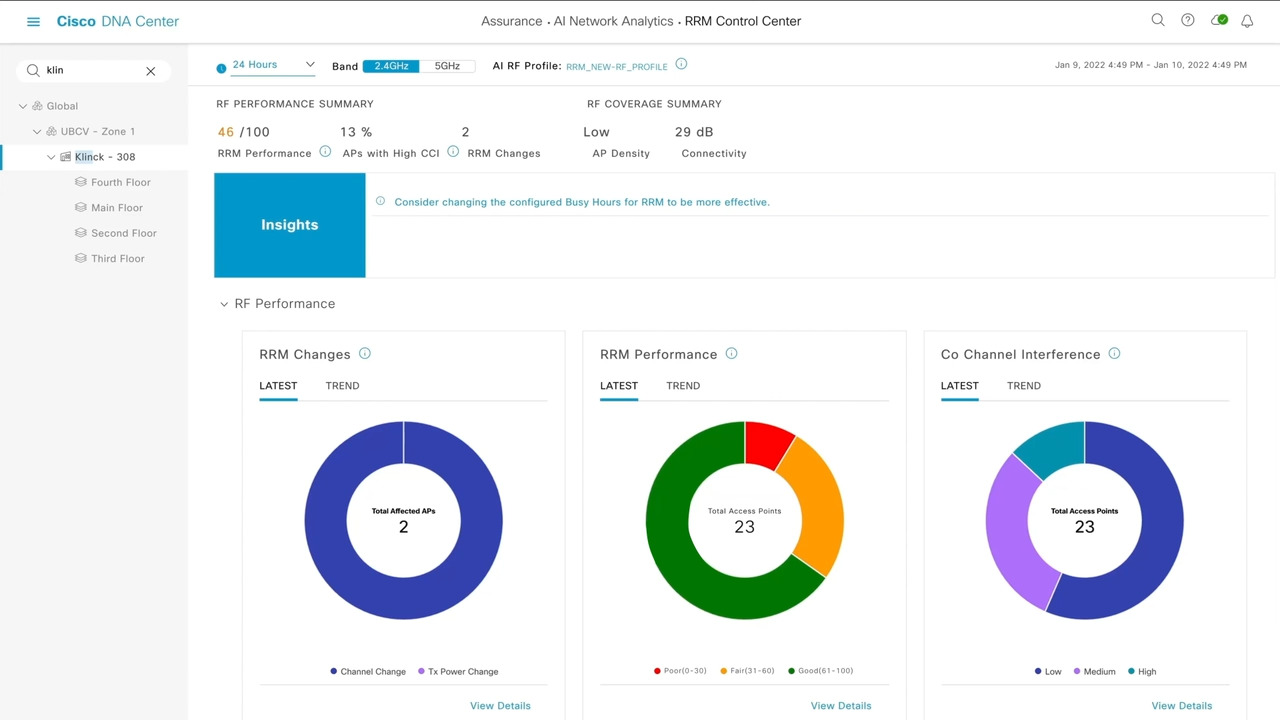
Choose “traditionalCisco” (Catalyst-based deployments) when you need deep control, complex campus designs, and advanced enterprise operations workflows—often supported by platforms like Cisco Catalyst Center, which is positioned as a management system for automation, assurance, and security policy at scale (with multiple deployment options).
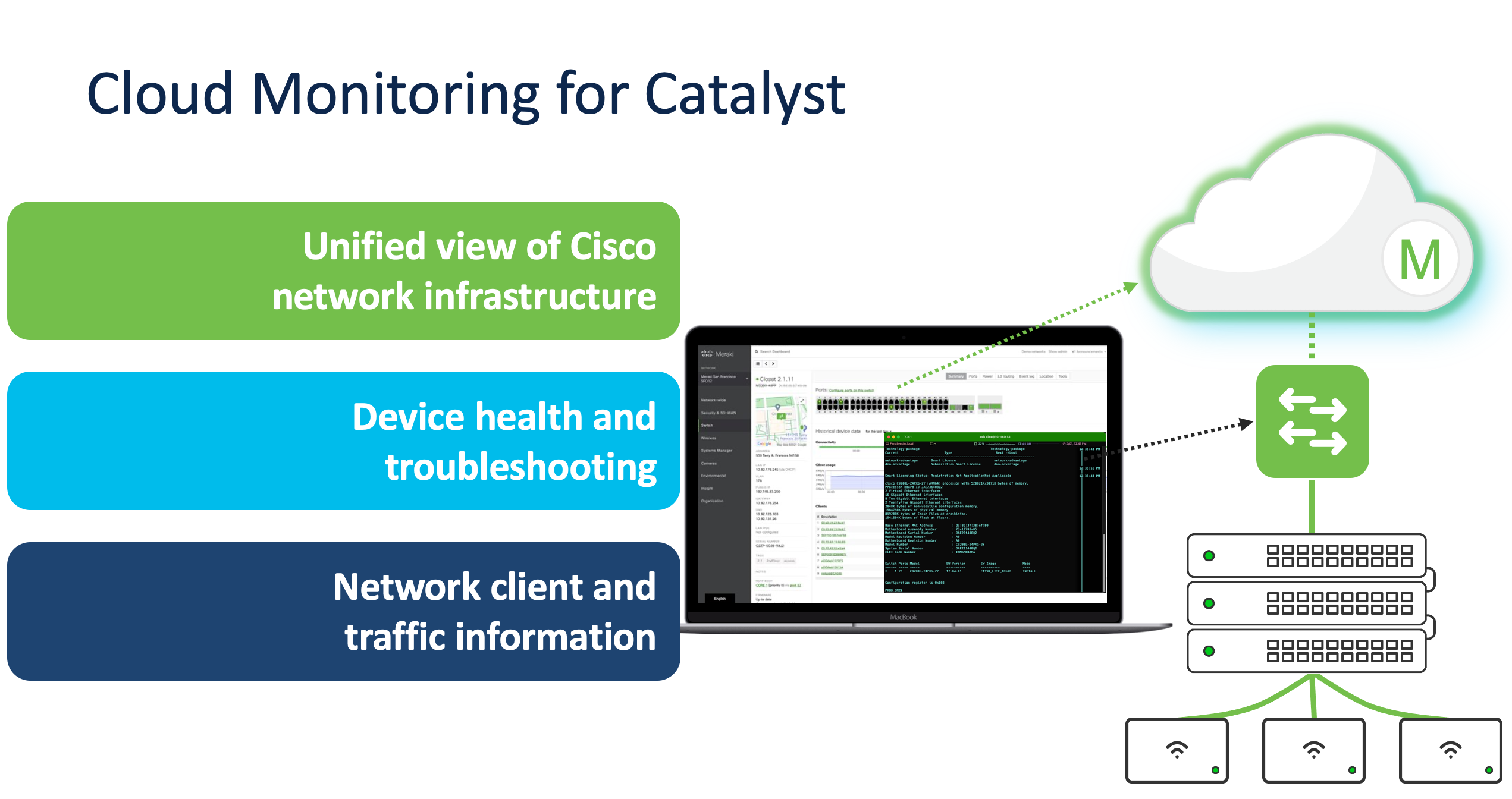
A major 2025–2026 nuance: the line between the two is blurring. Cisco is actively building hybrid management bridges (e.g., Meraki + Catalyst Center “Global Overview,” and cloud monitoring/management for Catalyst visibility in the Meraki dashboard). This matters if you expect to run mixed environments during a refresh cycle.
What “Meraki” and “traditional Cisco” mean in practice
In buyer conversations, “Cisco Meraki” usually means a cloud-managed operating model—central configuration, monitoring, and change workflows in the Meraki dashboard, plus subscription licensing structures described in Meraki licensing documentation.
“Traditional Cisco” usually means campus/enterprise networking built around Catalyst switching and enterprise network operations tooling (commonly including Cisco Catalyst Center for automation/assurance/policy workflows). Cisco describes Catalyst Center as a system that can “connect, secure, and automate” network operations and deliver AI/ML-assisted assurance and automation across wired and wireless networks.

Key differences that matter most to Dubai/UAE buyers
Management and day-to-day operations
Meraki’s operational advantage is centralized simplicity : you’re primarily working in one dashboard, with clear administrative permission management (administrator roles/permissions are documented) and organization-level configuration logging via the change log.
Traditional Cisco environments tend to offer greater depth and customization , but they can also require more specialized network engineering effort. Cisco positions Catalyst Center as a way to reduce operational burden through automation, standardized workflows, and assurance (including AI-driven insights and automation), which is especially relevant if you’re managing many sites with a lean team.
Licensing and “what you’re actually buying”
Meraki management/monitoring via the Meraki Cloud Service is explicitly tied to licensing: Cisco’s Meraki Cloud Service Offer Description states that to manage or monitor a compatible Cisco offer via the cloud service, you’re required to purchase the corresponding software license, and licensing behavior is described in Meraki licensing documentation.
For Catalyst-based environments, “traditional Cisco” is no longer purely CapEx + optional support. Cisco documents subscription tiers for Catalyst Center capabilities (Essentials vs Advantage), purchased with Catalyst switches and renewed on multi-year terms.
Also relevant to buyers in 2026: Cisco’s Networking Subscription documentation (updated February 10, 2026) describes unified licensing options and deployment modes that can include Meraki subscription licenses and different management modes (cloud/mixed/on-prem). It also describes enforcement behaviors (e.g., devices continue passing traffic while management/monitoring becomes restricted after license expiration).
Scalability and multi-site visibility
If your environment is “many small-to-medium sites,” Meraki’s model typically aligns well because its management structure is oriented around multi-site visibility and standardized operations. When your environment is “large enterprise hybrid,” Cisco’s newer hybrid approach matters: Cisco’s “Meraki and Catalyst Center Global Overview” is designed for large enterprises running both cloud and on-prem deployments, aiming to give centralized visibility across both from a single entry point.
Security controls, RBAC, and auditability
For many UAE organizations (finance, healthcare, logistics, education, and government-adjacent), the decision often hinges on governance features : access control, audit logs, and operational accountability.
Meraki documents dashboard administrator permissions, including granular roles and (in some cases) custom roles/RBAC capabilities, plus a change log that records configuration changes and who made them.
Meraki also documents data handling via the dashboard: it distinguishes management data vs user traffic and states the dashboard “never stores user traffic,” while storing management/configuration and analytics information.
Cisco Catalyst Center supports role-based access control (RBAC) and documents audit logs that capture critical activities and associate actions to a user for accountability.
Cloud dependency and “what happens if connectivity is lost”
This is frequently a deciding factor during Dubai/UAE procurement (especially for branches with variable WAN characteristics).
Meraki documents behavior when devices lose connectivity to the cloud (example: MR access points), and behavior depends on configuration characteristics; importantly, there are defined behaviors during cloud connectivity loss rather than “everything stops instantly.”
On the Catalyst subscription side, Cisco’s Networking Subscription documentation states that after license expiration, devices continue to pass traffic, but management/monitoring and access to subscription-provided support can be restricted, and software updates may be limited (with exceptions for critical security advisories).
Support model and replacement expectations
Meraki documents that support is available 24/7 to enterprise customers, and Cisco’s Meraki Cloud Service Offer Description states that purchase includes Meraki support.
For traditional Cisco support expectations in enterprise networking, Cisco’s Smart Net Total Care service description describes TAC access (24×7) and RMA/replacement elements depending on the purchased service level.
If you’re using Cisco Networking Subscription for some product families, Cisco notes that subscription support can include 24×7 TAC access but may not include hardware RMA unless you add an RMA upgrade service level.
| Dimension | Meraki | Traditional Cisco (Catalyst-based) |
|---|---|---|
| Primary management approach | Cloud dashboard-first operations | Enterprise operations workflows via platforms like Catalyst Center |
| Licensing model (high level) | Cloud service management/monitoring requires corresponding software license | Often multi-year subscription tiers for automation/assurance/policy features (Essentials/Advantage) |
| Multi-site & hybrid visibility | Strong multi-site dashboard model; hybrid visibility expanding via Global Overview | Strong for large/complex environments; hybrid visibility via Global Overview and Catalyst Center scale features |
| RBAC & auditability | Documented admin permissions + organization change log | Documented RBAC and audit logging in Catalyst Center |
| Cloud/WAN dependency considerations | Documented behaviors exist during cloud connectivity loss (device behavior depends on config) | Subscription enforcement may restrict management/support if subscription lapses, while traffic can continue |
| Support expectation (baseline) | 24/7 enterprise support documented; purchase includes Meraki support | TAC/advanced replacement via service contracts like Smart Net Total Care; replacement depends on service level |
Real-world scenarios for Dubai/UAE buyers
Scenario A: SME + multiple branches (retail, clinics, professional services)
If you have 3–50 sites and want a standardized way to deploy switching/Wi‑Fi/security with a small team, Meraki often aligns with the operational reality: centralized management, standardized templates, and a consistent dashboard workflow. The key procurement discipline is licensing renewals, because cloud management/monitoring is license-dependent.
Scenario B: Large campus or high-complexity enterprise (HQ + many buildings)
If you have a larger campus environment where network segmentation, governance, and complex operations are core requirements, traditional Cisco (Catalyst-based) is often a fit—especially where Catalyst Center is used for automation, assurance, compliance, and policy workflows across wired and wireless.
Scenario C: Hybrid environments (common during refresh cycles)
Many organizations don’t pick a single ideology; they evolve. Cisco’s documented “Global Overview” approach is explicitly designed to help you operate across both Meraki and Catalyst Center networks from a unified view, and Cisco’s Cloud Monitoring/Cloud Management initiatives for Catalyst show the direction of travel: hybrid visibility and progressively more cloud-centric operations even for Catalyst devices.
Decision matrix and cost guidance
_A practical decision matrix (score it honestly)._Score each statement from 0 (no) to 2 (yes). Add totals.
Operational model
- We have limited network engineering bandwidth and want to reduce day-to-day effort. (Meraki +2)
- We require deep customization and complex designs across the campus. (Traditional +2)
Sites & growth
- We expect frequent branch rollout/relocation and need fast templated deployment. (Meraki +2)
- We operate large campus networks where central automation + assurance is essential. (Traditional +2)
Governance
- We need straightforward change accountability and dashboard-level change history across networks. (Meraki +1)
- We need formal enterprise RBAC and audit log workflows integrated with enterprise operations. (Traditional +1)
Hybrid strategy
- We will run mixed environments and want unified visibility across both. (Hybrid +2)
Interpretation:
- Meraki wins if Meraki score is meaningfully higher and you can commit to renewals.
- Traditional wins if complexity/governance dominates and you have/retain skilled operators.
- Hybrid wins if the mixed-environment score is high and you want flexibility across refresh cycles.
Cost comparison guidance (subscription vs CapEx) without guessing prices
Because exact prices vary by model, service level, term, and distributor pricing, the best way to compare is a 3–5-year total cost of ownership (TCO) worksheet rather than “box cost.”
Meraki-style cost model (typical structure)
- Hardware acquisition (CapEx)
- Required license for cloud management/monitoring (OpEx/term-based)
- Support expectations (included with the offer purchase per Cisco’s Meraki Cloud Service Offer Description, but confirm what your specific SKU/term includes)
- Deployment services (design, rollout, cutover)
- Operations cost (hours/month, travel for branches, incident response)
Traditional Cisco-style cost model (typical structure)
- Hardware acquisition (CapEx)
- Subscriptions for automation/assurance/policy tiers where applicable (Cisco documents subscription tiers tied to Catalyst Center capabilities and renewals)
- Service contracts for TAC and replacement SLAs (e.g., Smart Net Total Care), chosen by criticality
- Deployment services
- Operations cost (often higher if you rely on deep customization but lack staff time)
Important “hidden cost” items people miss
- License lapse behavior: Cisco documents scenarios where traffic continues but management/support becomes restricted after license expiration under Cisco Networking Subscription. Budget owners should treat renewals as an operational risk item, not a procurement afterthought.
- Replacement SLAs: TAC access is not the same as advanced hardware replacement; Smart Net service descriptions outline TAC and RMA options, and Cisco’s Networking Subscription data sheet notes RMA may require an add-on.
- Hybrid approach cost: If you deliberately mix Meraki and Catalyst, include training/tooling/cross-platform operations—though Cisco’s Global Overview is aimed at reducing tool sprawl in hybrid environments.
Procurement checklist and decision flow
12-point procurement checklist (Dubai/UAE buyer edition)
- Document the outcome : branches, users, apps, and what “good” looks like (speed, stability, compliance).
- Choose an operating model : cloud-managed-first vs enterprise-managed vs hybrid.
- List your must-have governance controls : RBAC requirements, audit logs, separation of duties.
- Validate licensing dependencies : confirm what is required to manage/monitor the solution in the intended platform (Meraki vs Catalyst Center/CSSM).
- Model renewals as a risk : plan renewal cycles and ownership; document who is accountable for renewal approval and payment.
- Confirm support expectations : 24/7 support access, escalation path, and replacement/RMA service level.
- Verify authorized sourcing : validate the supplier/reseller using Cisco’s official partner locator tools before issuing a PO.
- Test WAN/cloud assumptions : document what happens during internet outages and confirm device behavior fits your risk tolerance.
- Confirm data handling posture : ensure management/analytics data handling matches your internal compliance requirements.
- Run a pilot (one branch + one HQ area): measure deployment effort, troubleshooting speed, and change control.
- Create a cutover plan : rollback steps, maintenance window strategy, and stakeholder communications.
- Lock internal documentation : as-built diagrams, admin access model, and audit responsibilities for post-go-live operations.
If you’re buying in Dubai and need a fast, low-risk decision, request a bill-of-materials review plus a 3–5-year TCO worksheet (hardware, licenses, support/RMA, and rollout services). Align the architecture to your site count, WAN realities, and renewal discipline—then procure with clear SLAs and verified sourcing.
Need help choosing between Cisco Meraki and traditional Cisco solutions?
Our team can guide you based on your business size, network requirements, and budget.
Fill in the form below and we’ll get back to you with the right recommendation.
Name
Contact Number
Message
Send
Frequently Asked Questions
Is Cisco Meraki better than traditional Cisco for Dubai SMEs?
It can be—especially if you run multiple branches and want simpler operations. The key is committing to licensing renewals that enable cloud management/monitoring.
Does Meraki stop working if the internet goes down?
Meraki documents defined behaviors during loss of cloud connectivity (behavior varies by device/config). You typically lose cloud management visibility/changes, but device behavior depends on the configuration and product family.
Do Catalyst networks require subscriptions now?
Cisco documents subscription tiers for Catalyst Center capabilities (Essentials/Advantage) and also documents Cisco Networking Subscription licensing options and enforcement behaviors. Exact requirements depend on your architecture and desired features.
Can I run a hybrid environment (Meraki branches + Catalyst HQ)?
Yes. Cisco’s Global Overview initiative is explicitly aimed at unified visibility across Meraki and Catalyst Center networks, which can help reduce tool sprawl in hybrid environments.
How should I compare costs without exact pricing?
Use a 3–5-year TCO model that includes hardware, licenses/subscriptions, support/RMA levels, implementation, and ongoing operations. Pay special attention to renewal and enforcement behaviors described in Cisco licensing documentation.